
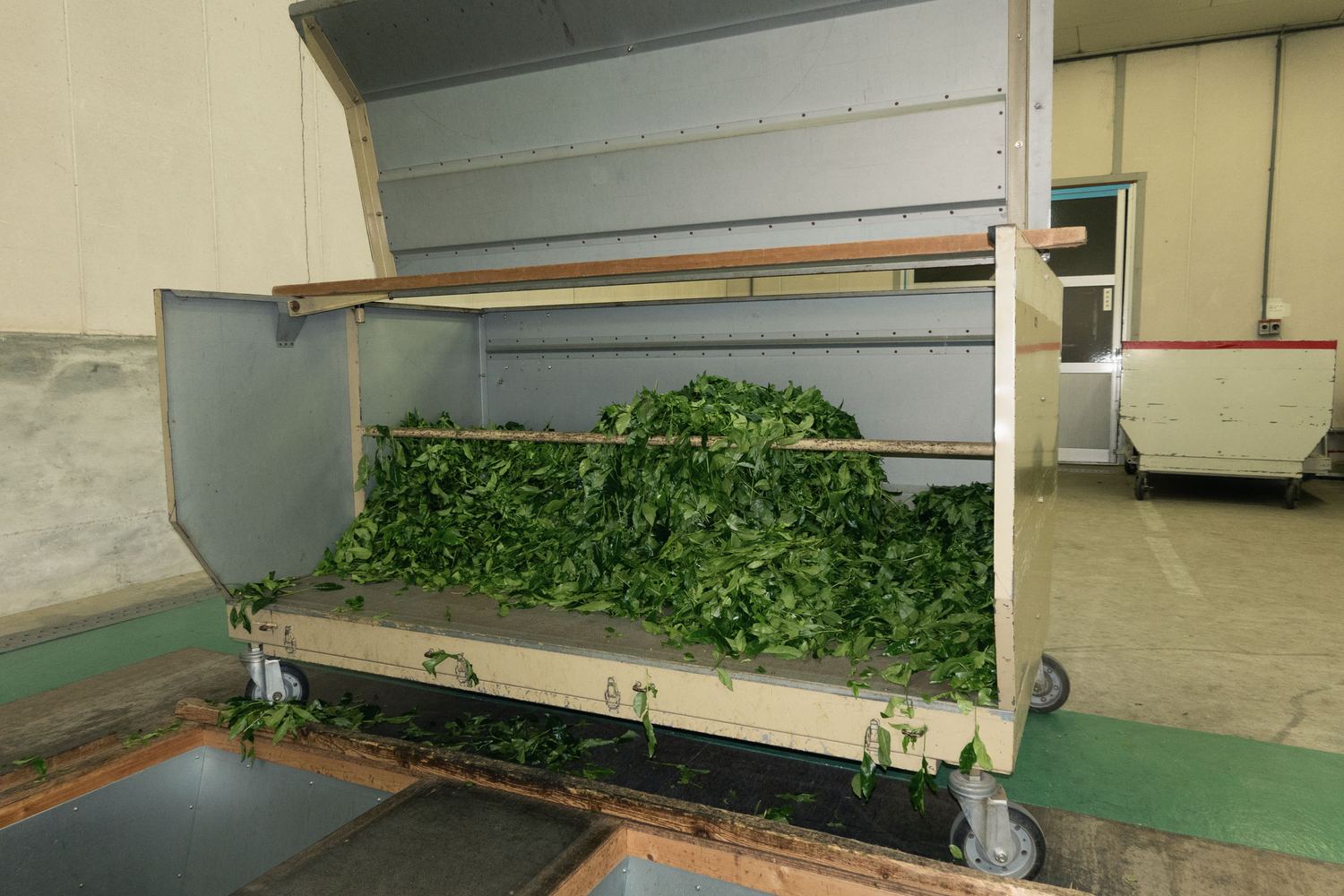
Every story this week traces back to the same pressure point: global matcha demand is reshaping what Japanese tea costs and who can afford to grow it. The Kansai Tea Competition's record tencha price, the Uji merchant's hojicha warning, and the Japan Tea Industry Central Association's export figures all describe the same boom from different angles, while Shizuoka's producer collapse and the ministry's export tally show what that boom is doing to the base of the industry.
This week in five numbers
Every figure exactly as the outlet printed it, credited to the outlet that reported it and compiled by Matcha Wire.- Competition entries: 336点 — reported by Asahi Shimbun Digital on 6 August 2026. # ↓ the story
- Producers aged 29 and under: 2% — reported by Shizuoka Shimbun on 5 August 2026. # ↓ the story
- Hojicha raw material price increase: 4倍 — reported by Kyoto Shimbun on 4 August 2026. # ↓ the story
- Total farm and food exports, H1 2024: 8977億円 — reported by Asahi Shimbun Digital on 4 August 2026. # ↓ the story
- Global tea production (2025): 約700万トン — reported by japan.storm.mg on 4 August 2026. # ↓ the story
Read together, the five stories sketch an industry stretched between record income abroad and shrinking capacity at home.
01 Kansai Tea Competition opens in Yokkaichi with 336 entries; matcha demand drives premium pricing
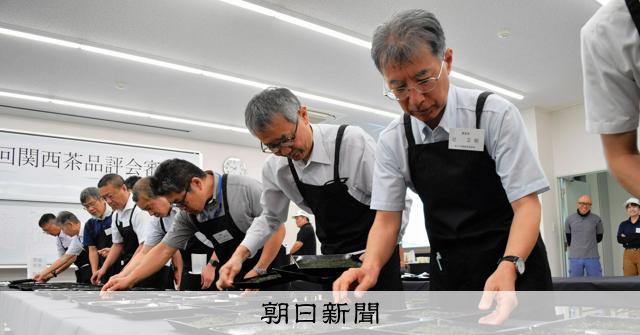
Kansai's tea competition drew 336 entries as last year's top tencha lot sold for ¥700,000 per kilogram — reported by Asahi Shimbun Digital on 6 August 2026.
Asahi Shimbun Digital reports that the 78th Kansai Tea Competition opened September 5 in Mie Prefecture with 336 entries across five categories, including tencha, matcha's raw material, submitted by producers from six prefectures across central and western Japan. The outlet notes Mie ranks third nationally in raw tea production, while Kyoto's Uji brand excels in tencha and gyokuro and Aichi leads tencha output. Last year's winning tencha sold for ¥700,000 per kilogram, tens of times the standard price, which the paper links directly to overseas matcha demand. Judging runs through September 7, following an auction held September 3 at JA Suzuka. The paper also notes producers are adjusting fertilizer and irrigation as warming temperatures complicate cultivation, quoting a hope that producers will compete with neighboring prefectures and produce even higher-quality leaves.
02 Shizuoka Tea Producers Fall 43.5% in Five Years as Pandemic Consumption Slump and Raw Tea Price Collapse Deepen Crisis
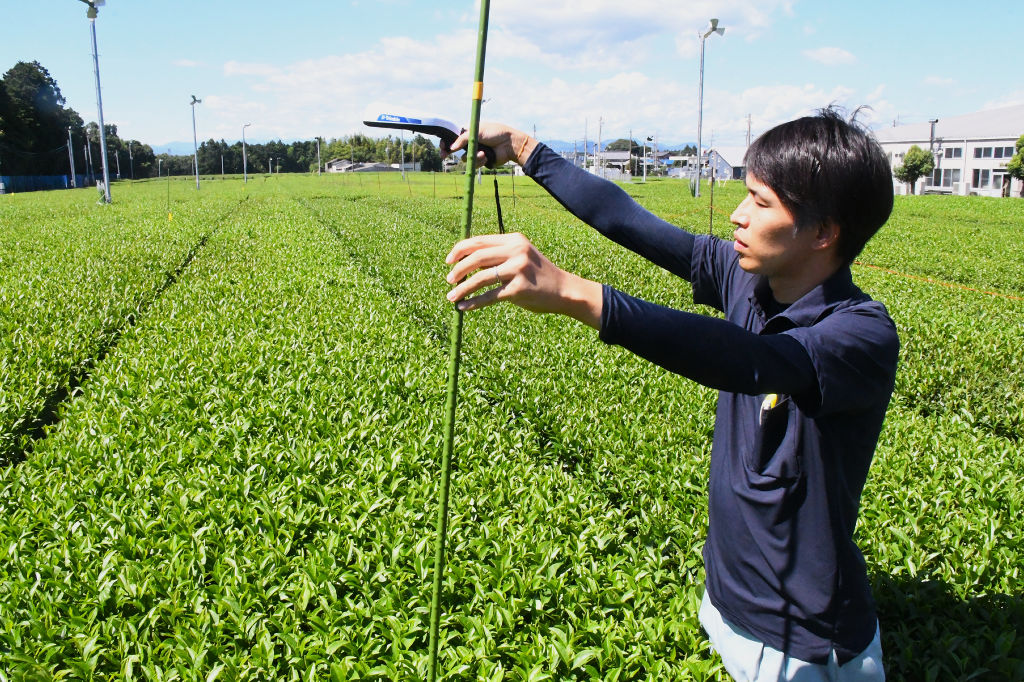
Shizuoka's tea producer count fell to 5,012 in 2025, a 43.5% drop from five years earlier — reported by Shizuoka Shimbun on 5 August 2026.
Shizuoka Shimbun reports that the prefecture's tea producer count fell to 5,012 in 2025, down 43.5% from 2020, according to the Kanto Farm Bureau of Japan's agriculture ministry. The paper ties the decline to pandemic-era demand weakness compounded by a 2024 collapse in wholesale prices for raw tea, which it says exposed how thin farm margins had become. Aging deepens the problem: producers aged 29 and under make up just 2% of the total, leaving succession in doubt across the prefecture's growing areas. The outlet quotes an assessment that the fallout from pandemic consumption weakness and the 2024 collapse in raw tea trading prices has brought harsh farm economics into sharp relief. Shizuoka has long been one of Japan's largest tea regions, so the scale of exits described here signals strain even as exports of matcha-linked green tea keep climbing nationally.
03 Uji tea merchant warns of ¥1,000-per-100g hojicha future as matcha boom diverts tencha production
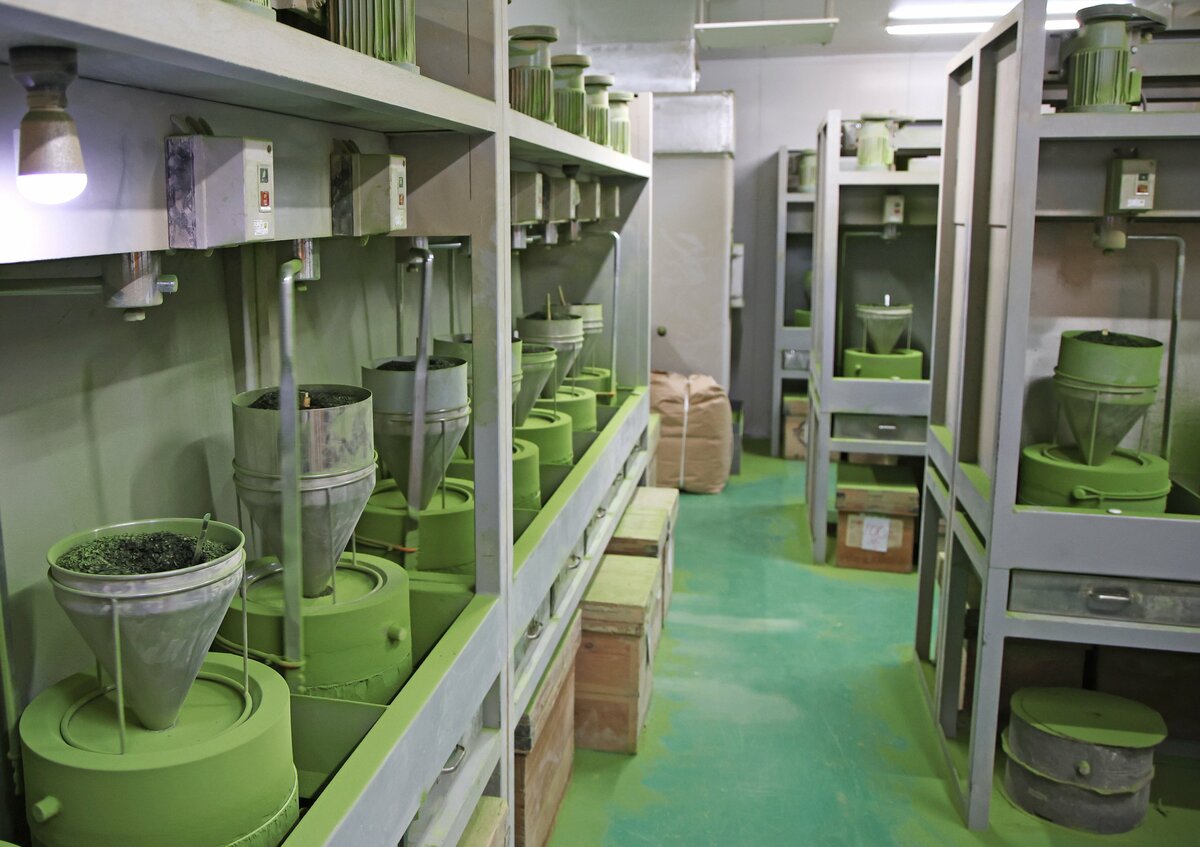
A Uji merchant warns hojicha could reach ¥1,000 per 100g as raw material costs have already quadrupled in two years — reported by Kyoto Shimbun on 4 August 2026.
Kyoto Shimbun reports that hojicha raw material prices have risen four-fold over the past two years as producers nationwide redirect tencha, matcha's base material, toward export markets and away from everyday teas. A Uji tea merchant cited by the paper predicts hojicha could reach ¥1,000 per 100 grams if the trend continues, up from roughly ¥250 to ¥300 per 100 grams in the Kansai region about two years ago. The outlet reports that sencha-producing areas in Shizuoka are losing producers to aging and closure, with many unable or unwilling to convert to tencha. It also notes Japan has registered GI protection for Japanese tea, though its effectiveness against cheaper Chinese and Vietnamese competition remains untested. The merchant told the paper, 'On volume and price we cannot beat China, so Japan has no choice but to compete on quality,' warning that Japan's culture of drinking its own tea is at risk of disappearing.
04 Japan's farm and food exports reach record 8,977 billion yen in first half; matcha boom drives green tea surge

Japan's farm and food exports hit ¥8,977 billion in H1 2024, with green tea sales up 83.5% to ¥483 billion — reported by Asahi Shimbun Digital on 4 August 2026.
Asahi Shimbun Digital reports that Japan's agricultural and food exports reached 8,977 billion yen in the first half of 2024, up 10.9% year-on-year and a second consecutive record for the period. Green tea led the gain, rising 220 billion yen, an 83.5% increase, to 483 billion yen, with North America and South Korea named as the main drivers behind global matcha demand. The paper notes growth is decelerating compared with the prior year's pace, and that Japan would need 24.1% annual growth over the remaining five years to hit its 5 trillion yen export target by 2030. The United States remained the largest market at 1,626 billion yen, followed by Hong Kong at 1,100 billion yen and China at 940 billion yen. The outlet quotes an assessment that fundamental acceleration of pace is essential to meet the goal.
05 Japan Tea Industry Central Association holds press conference at FCCJ, addresses matcha boom challenges and tea tourism prospects
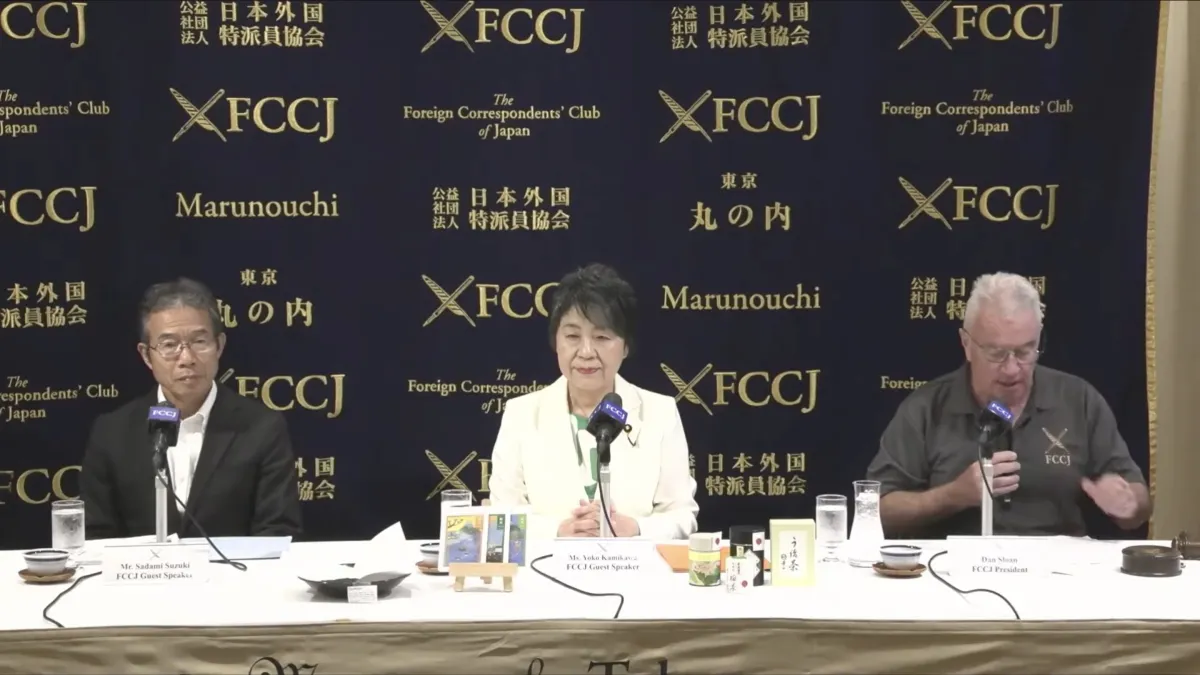
Japan's tea exports rose 98.2% year-on-year to 721 billion yen, with export volume up 43.4% to 12,672 tons (2025) — reported by japan.storm.mg on 4 August 2026.
Google News reports that the Japan Tea Industry Central Association told a July 31 press conference that tea exports reached 721 billion yen, up 98.2% year-on-year, with volume climbing 43.4% to 12,672 tons on global matcha demand, and that the United States accounts for roughly 35% of global tea exports. The association warned that rapid conversion from sencha to tencha is straining the supply chain, since tencha requires shade-covering, pest management and five-year cultivar replanting alongside costly dedicated factory equipment. Japan's cultivated tea area has shrunk from 49,000 hectares in 2002 to 33,000 hectares, and leaders warned excessive conversion risks sencha prices nearly doubling domestically, pushing consumers toward barley tea. The outlet quotes the association saying that building a sustainable industry structure with a 30 to 40 year horizon requires cultivating young farmers as the highest priority, alongside growing tea tourism, including one Shizuoka factory now drawing more than 500 foreign visitors annually.
Taken together, this week's reporting suggests the matcha boom is not one story but several: a windfall for top lots and export totals, and a squeeze on everyday tea, small producers, and the workforce that grows it.
 From the Ooika shop
Ooika Matcha Storage Jar
$10.00
Shop now →
From the Ooika shop
Ooika Matcha Storage Jar
$10.00
Shop now →
How this edition was made
Every weekday morning Matcha Wire scans about 40 Japanese sources — national and regional newspapers, government ministries, prefectural tea associations and trade journals — and scores each story for its relevance to the tea industry. This edition covers the five highest-ranked stories of the week just ended, one of them the week's most-read story on Matcha Wire. Figures are quoted as the outlet printed them: nothing is converted between units, nothing is converted between currencies, nothing is rescaled, averaged or estimated, and no number appears on this page that the source credited beside it did not report. Where a date here reads "reported on", it is the date the outlet published, not the date we compiled it. Matcha Wire is the compiler of these figures and never the source of one.
Compiled automatically by Matcha Wire from tracked Japanese sources, with no human editor in the loop. Every figure is credited to the outlet that reported it and checked against that outlet's own article. Corrections: hello@ooika.co.
Using these figures. The figures on this page are facts reported by the outlets credited beside them, and they are free to reuse. If Matcha Wire's compilation saved you the work, a link back is appreciated. The written analysis is ours; please don't republish it wholesale.
Matcha Wire is published by Ooika, in Kyoto, Japan. You can reach a person at hello@ooika.co.
Comments
Create a free account or sign in to join the conversation.
Be the first to comment.