
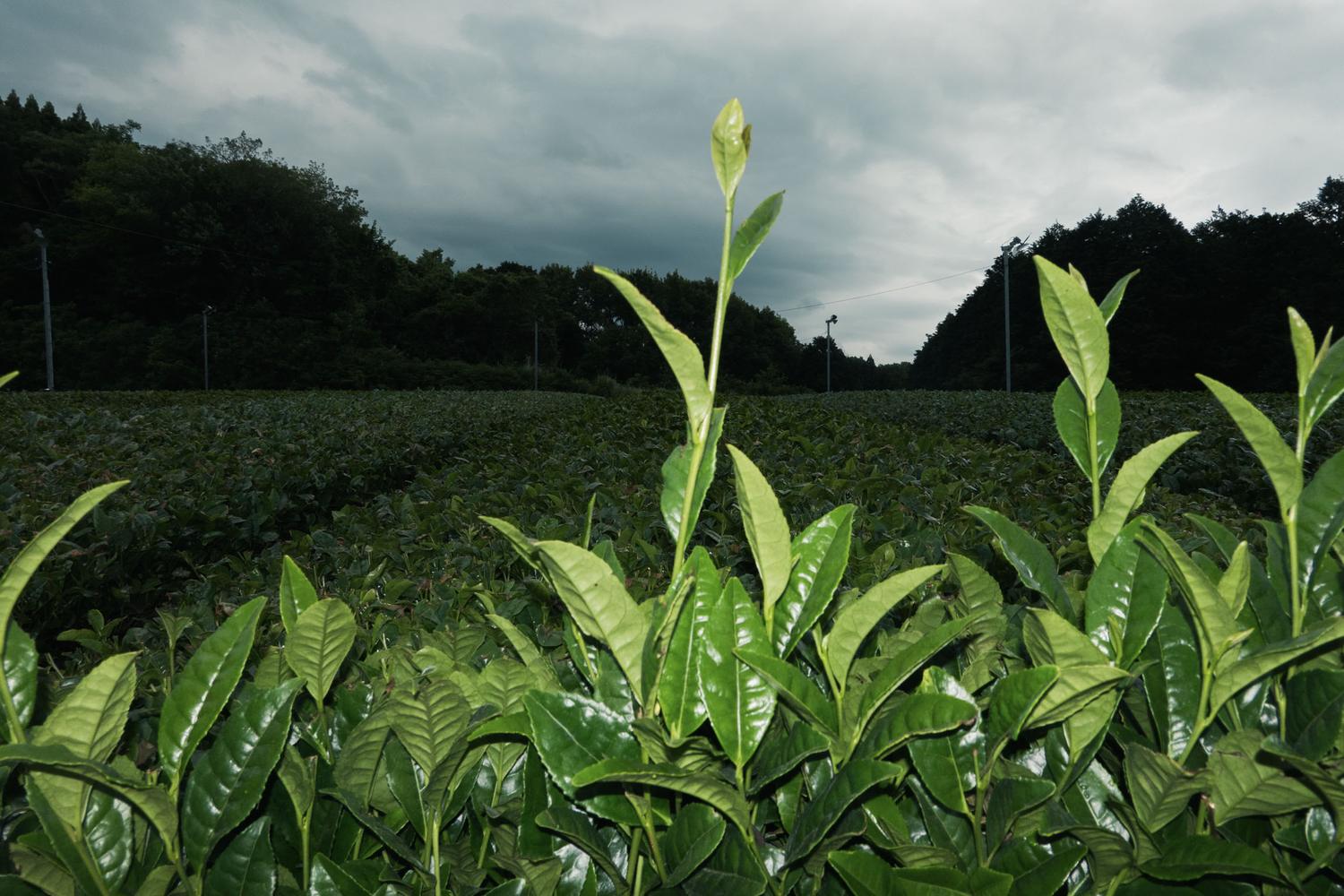
This week's dispatch follows matcha from field to flagship counter. A government-backed congress, a cultivar-preservation project, a farm turning to data, a startup contracting tea fields and a retail brand opening a new shop all point to the same shift: Japan's matcha sector is building infrastructure, literal and institutional, to keep pace with demand it did not expect to grow this fast.
This week in numbers
Every figure exactly as the outlet printed it, credited to the outlet that reported it and compiled by Matcha Wire.- General admission ticket price: ¥55,000 — reported by PR TIMES on 27 October 2026. # ↓ the story
- BlueField funding: 約3・5億円 — reported by Yomiuri Shimbun on 29 October 2026. # ↓ the story
- Farm size: 18ヘクタール — reported by Minami-Nippon Shimbun on 1 November 2026. # ↓ the story
The International Matcha Congress, BlueFarm's new supply model, Kamimuro Seicha's award-winning tencha conversion, the Zairai genetics project out of Wazuka, and MATCHAMON's Kawagoe expansion each sit at a different point on that chain, but together they describe an industry moving from ad hoc growth toward deliberate planning.
01 MATCHAMON, Japan-based global matcha brand, opens new Kawagoe location
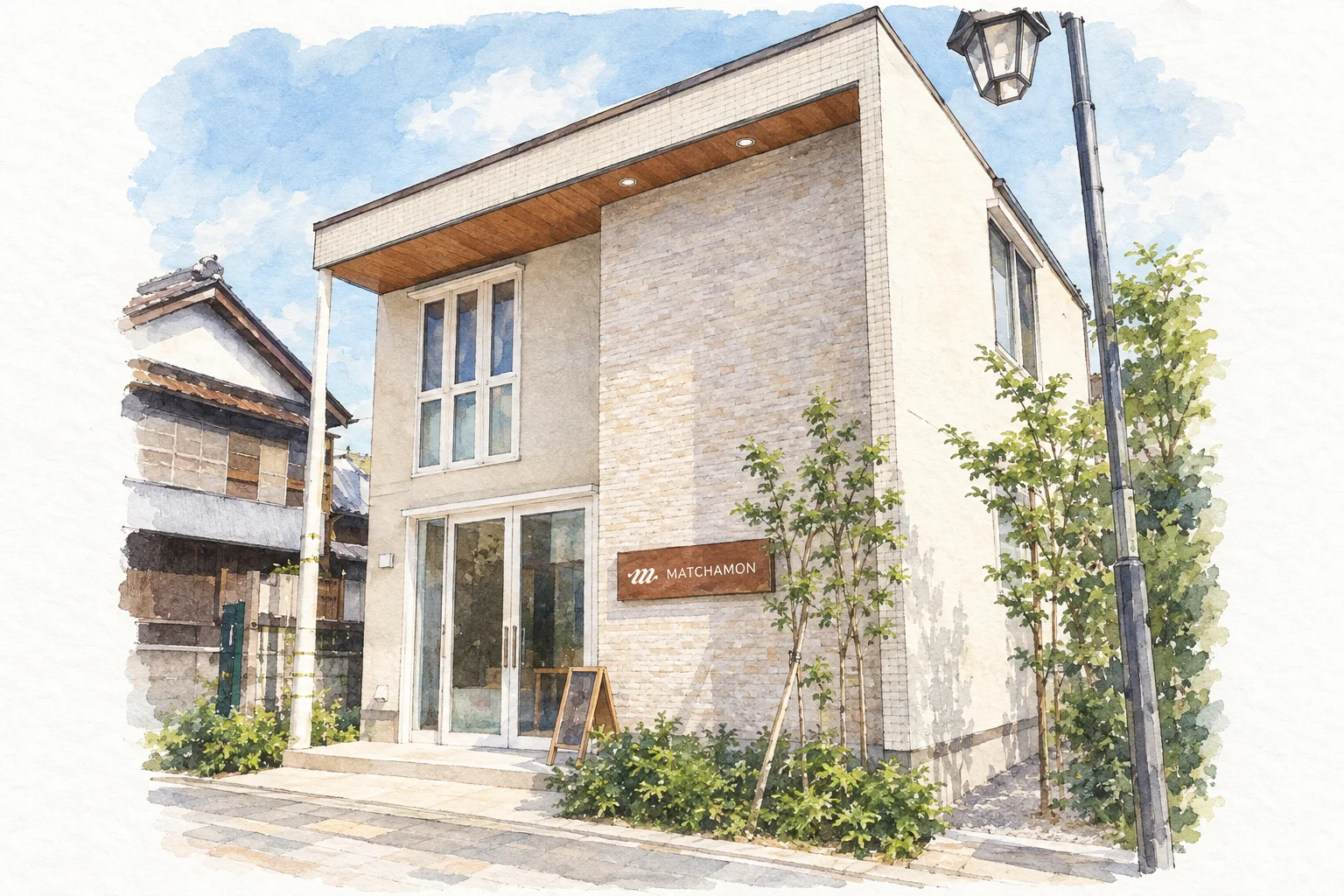
MATCHAMON will open a limited-time pop-up in Kawagoe during the city's annual festival on October 17 and 18, 2026, before converting the location into a permanent flagship store on October 31, 2026, according to PR TIMES. The brand sells only Japanese-certified organic matcha, sourced directly from primary producers rather than wholesalers, and builds its menu around single-origin tencha and seasonal pairings meant to showcase each lot's own character. PR TIMES reports the company is now recruiting franchise partners both in Japan and abroad as it looks to scale the concept. In material shared with the outlet, the brand frames its approach as a 'third wave of matcha,' saying, 'We champion the third wave of matcha, positioning matcha not merely as a flavor but as a culture to be enjoyed, offering matcha that reflects attention to origin, cultivar, and production background.'
02 Zairai, matcha milling, and more with Pau from Tea Nursery

A new episode of the Specialty Matcha Podcast features a Wazuka tea farmer describing a genetic-sampling project tied to a Zairai summit in Shizuoka, where seed stock is being traced across prefectures to test long-standing claims about who first planted tea in a given area. The podcast reports researchers are using the sampling because, as one guest put it, 'genetic sampling is being used to trace which prefectures share seed stock and to test the legends about who planted tea where.' The same conversation covers the farmer's own effort to bring a long-abandoned Zairai field back into cultivation, described as 'what it takes to bring a century-old abandoned Zairai field back into production.' The episode also touches on the daily discipline required to run a stone mill, underscoring how much manual oversight matcha milling still demands even as interest in heritage cultivars grows.
Specialty Matcha Podcast Original (Japanese) ↗ Read the full story →
03 International Matcha Congress 2026 Confirmed with Government and Industry Backing
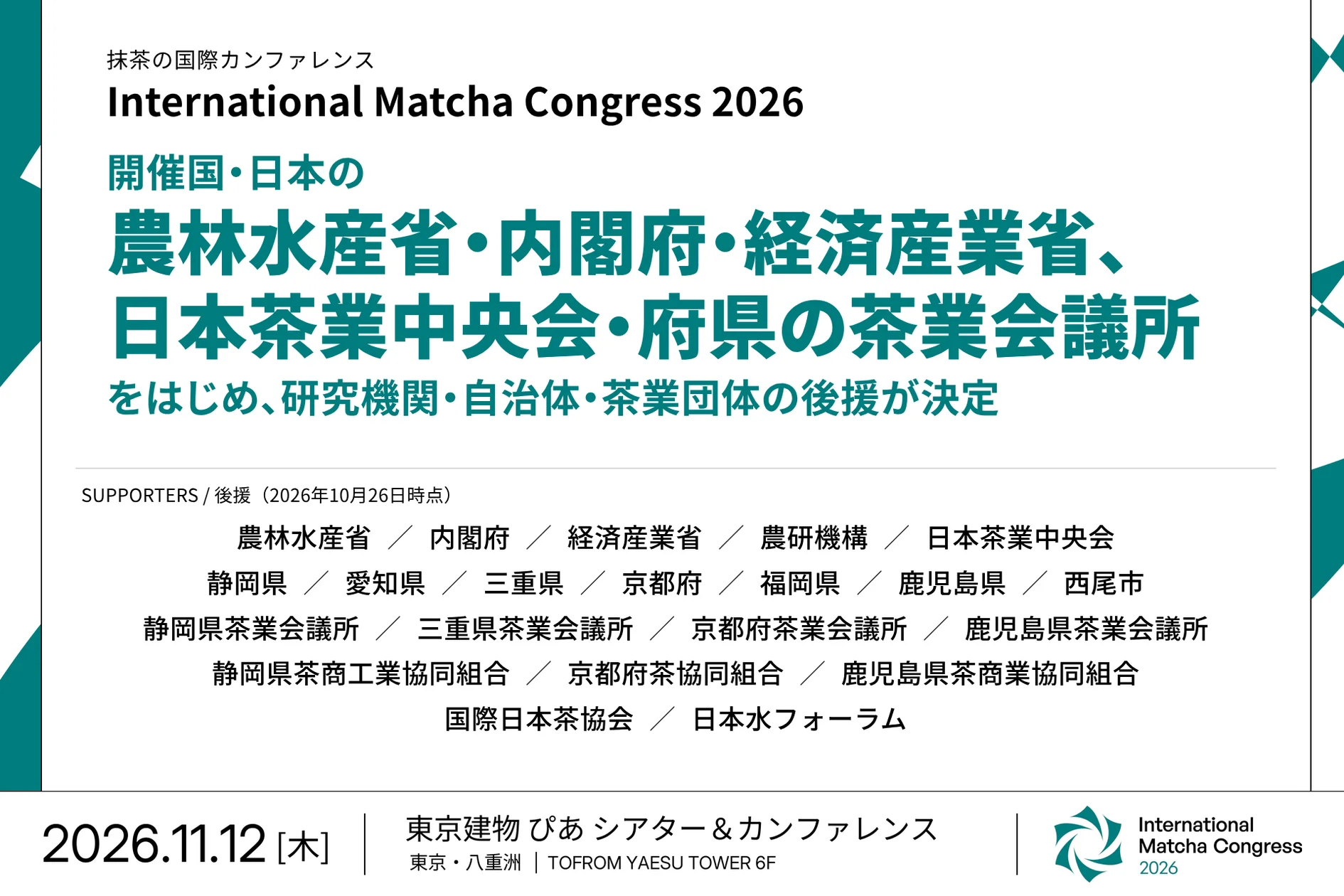
General admission ticket price: ¥55,000 — reported by PR TIMES on 27 October 2026.
The International Matcha Association has locked in government and institutional backing for the International Matcha Congress 2026, set for November 12, 2026 in Tokyo's Yaesu district, PR TIMES reports. Endorsers now include Japan's agriculture ministry, the Cabinet Office, the trade ministry, and tea-industry research bodies from Shizuoka, Kyoto, Kagoshima and other producing regions. Tickets run ¥55,000 for general admission and ¥22,000 for tea producers, with the agenda built around supply stability, producer succession, and quality grading, alongside efforts to connect producers with global buyers. The association, formed in April 2026, says its mandate covers international standards and quality grading work. PR TIMES quotes organizers saying, 'To connect expanding global interest in matcha to the sustainable development of producing regions, we must deepen understanding of the techniques and culture that regions have cultivated, and share the challenges facing both producers and consumers.'
04 Hamamatsu startup BlueFarm launches matcha supply service with corporate contracts
BlueField funding: 約3・5億円 — reported by Yomiuri Shimbun on 29 October 2026.
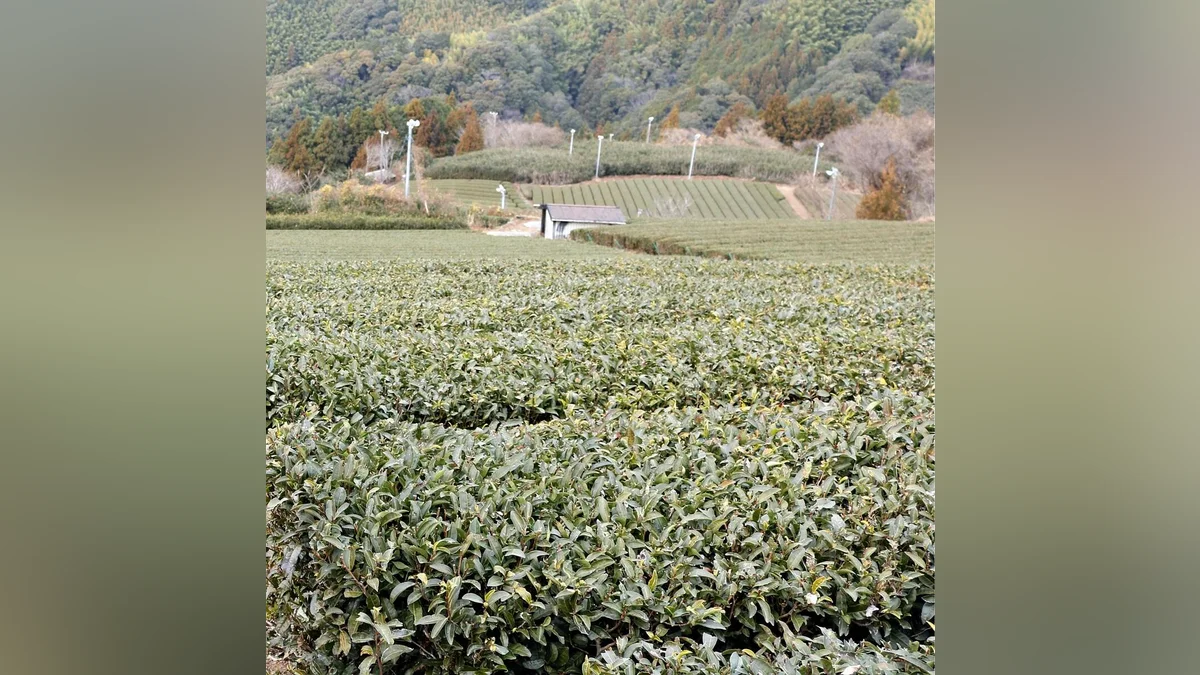
Hamamatsu startup BlueFarm has launched MatchaaS, a service letting companies contract specific tea-field acreage to lock in organic matcha supply rather than buying leaf on the open market, according to reporting gathered by Google News. The move follows the September creation of subsidiary BlueField, funded with ¥350 million from Suzuyo Shoji and regional partners, money the company says will go toward hiring farm staff and expanding production capacity. Founded in July 2021 around reclaiming abandoned tea fields, BlueFarm now plans factories and new plantings in Aichi and Gifu alongside its existing Shizuoka base. The company frames the shift as a response to rising overseas demand for organically grown, low-footprint matcha, saying, 'We shift procurement from buying matcha on the market to securing the tea fields that produce it,' and adding, 'This moment when green tea and matcha are receiving global attention is the last chance to revitalize Japan's tea industry.'
05 Kamimuro Seicha awarded top prize for management excellence; matcha demand drives tencha conversion, data-driven productivity gains
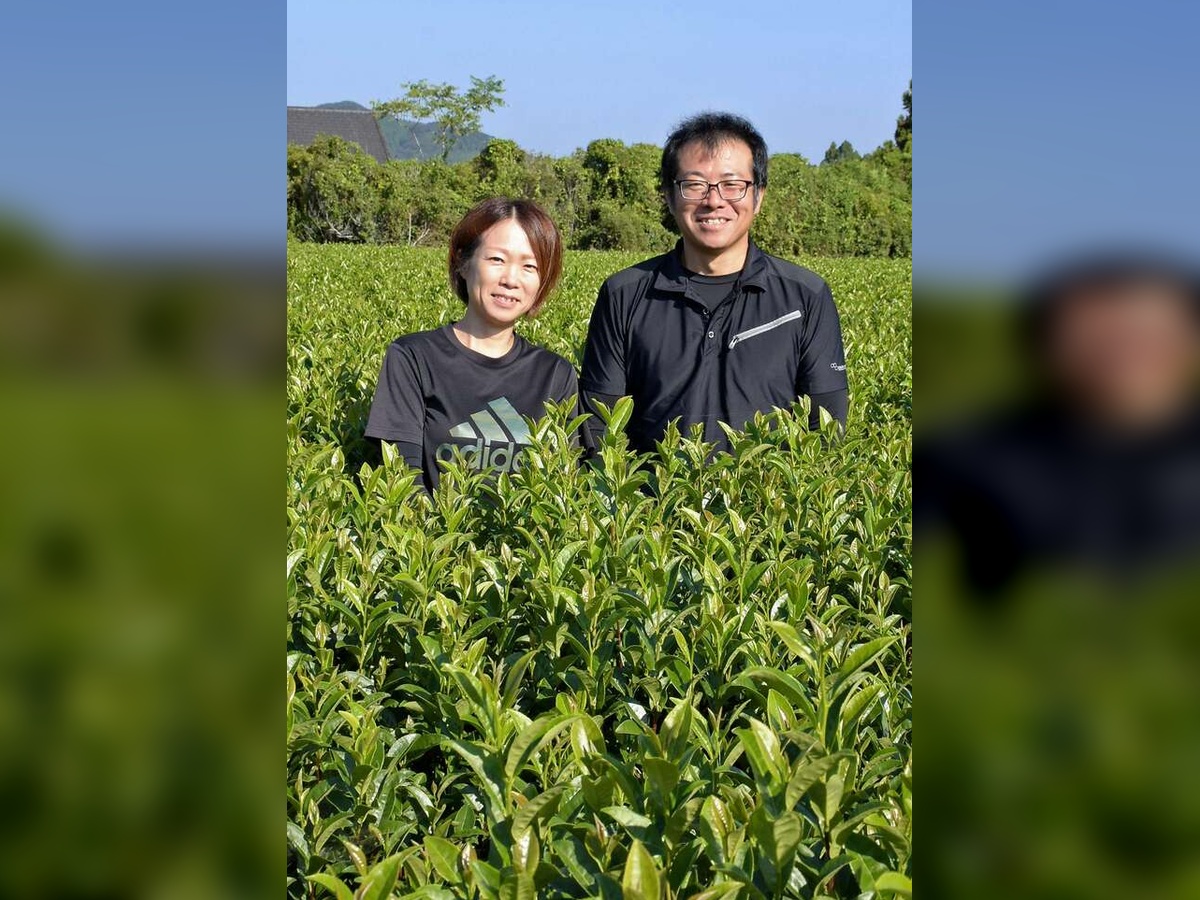
Kamimuro Seicha's 18-hectare shift toward tencha earned Kagoshima back-to-back national management awards — reported by Minami-Nippon Shimbun on 1 November 2026.
Kamimuro Seicha, an 18-hectare tea operation in Shibushi, Kagoshima, has won the Minister of Agriculture, Forestry and Fisheries Award in this year's national excellence-in-management program, the Minami-Nippon Shimbun reports. The paper credits the win to the farm's move toward tencha production, the leaf used for matcha, paired with data-driven cultivation methods aimed at lifting both yield and profitability across the full 18 hectares. It is the second consecutive year a Kagoshima producer has taken the top prize in this category, a run the newspaper frames as evidence the prefecture's tea sector is planning for sustained matcha demand rather than treating the shift as a one-off adjustment. The award itself recognizes management innovation broadly, suggesting Kamimuro's planning practices are being held up as a model for other producers.
Taken together, the five stories suggest matcha's current boom is prompting structural investment rather than just price spikes, from Tokyo policy rooms to a single reclaimed field in Wazuka. Matcha Wire will keep tracking how that investment plays out as the congress date approaches in November.
 From the Ooika shop
Chikueido Takayama Chasen (80 Tines 八十本立)
$45.00
Shop now →
How this edition was made
Every weekday morning Matcha Wire scans about 40 Japanese sources — national and regional newspapers, government ministries, prefectural tea associations and trade journals — and scores each story for its relevance to the tea industry. This edition covers the five highest-ranked stories of the week just ended, one of them the week's most-read story on Matcha Wire. Figures are quoted as the outlet printed them: nothing is converted between units, nothing is converted between currencies, nothing is rescaled, averaged or estimated, and no number appears on this page that the source credited beside it did not report. Where a date here reads "reported on", it is the date the outlet published, not the date we compiled it. Matcha Wire is the compiler of these figures and never the source of one.
Compiled automatically by Matcha Wire from tracked Japanese sources, with no human editor in the loop. Every figure is credited to the outlet that reported it and checked against that outlet's own article. Corrections: hello@ooika.co.
Using these figures. The figures on this page are facts reported by the outlets credited beside them, and they are free to reuse. If Matcha Wire's compilation saved you the work, a link back is appreciated. The written analysis is ours; please don't republish it wholesale.
Matcha Wire is published by Ooika, in Kyoto, Japan. You can reach a person at hello@ooika.co.
Comments
Create a free account or sign in to join the conversation.
Be the first to comment.