
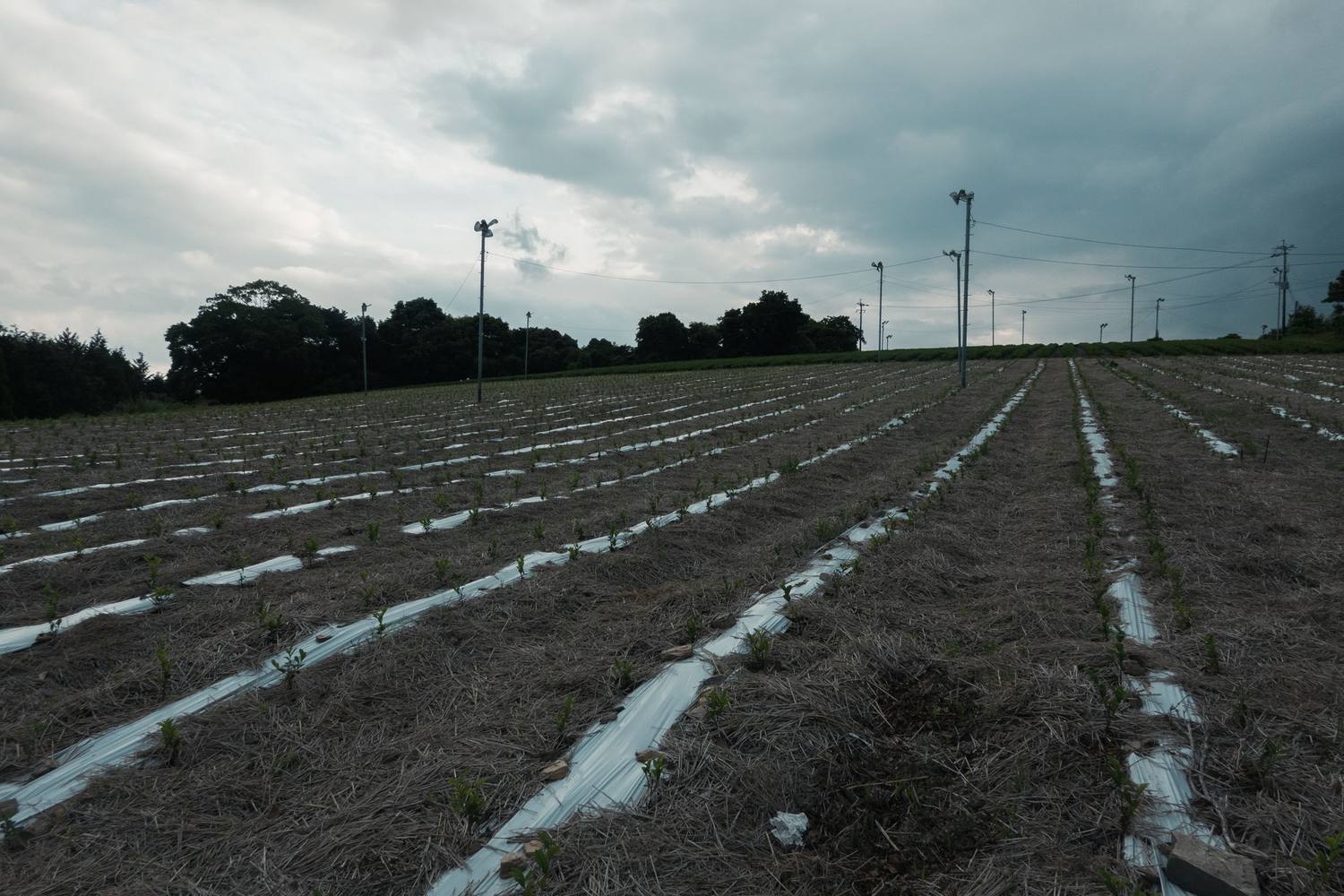
Every story this week traces back to the same pressure: matcha demand that keeps outrunning supply. The record Uji trading value, Shizuoka's record second-flush spike, and the near-doubling of tencha prices worldwide all describe the same market squeeze from different angles, while the Kyoto Shimbun visit to Horii Shichimeien and the Uji Tea Manufacturing Technique Preservation Association's hand-rolling training show what is being asked to survive underneath it.
This week in numbers
Every figure exactly as the outlet printed it, credited to the outlet that reported it and compiled by Matcha Wire.- Tree age at Oku-no-Yama garden: 300 years — reported by Kyoto Shimbun on 1 August 2026. # ↓ the story
- Total trading value, combined first and second flush: 約129億4千万円 — reported by Asahi Shimbun Digital on 31 July 2026. # ↓ the story
- Kyoto tea production as share of national area: 3% — reported by MAFF on 30 July 2026. # ↓ the story
- Second-flush average price, current year: 2千円台前半 — reported by Chunichi Shimbun on 31 July 2026. # ↓ the story
Read together, the five reports lay out both sides of the matcha boom: the money moving through Uji and Shizuoka auctions, and the centuries-old trees, kilns and hand techniques that supply the leaf everyone now wants.
01 Legacy tea merchant and farmer preserve Uji's deep tea heritage
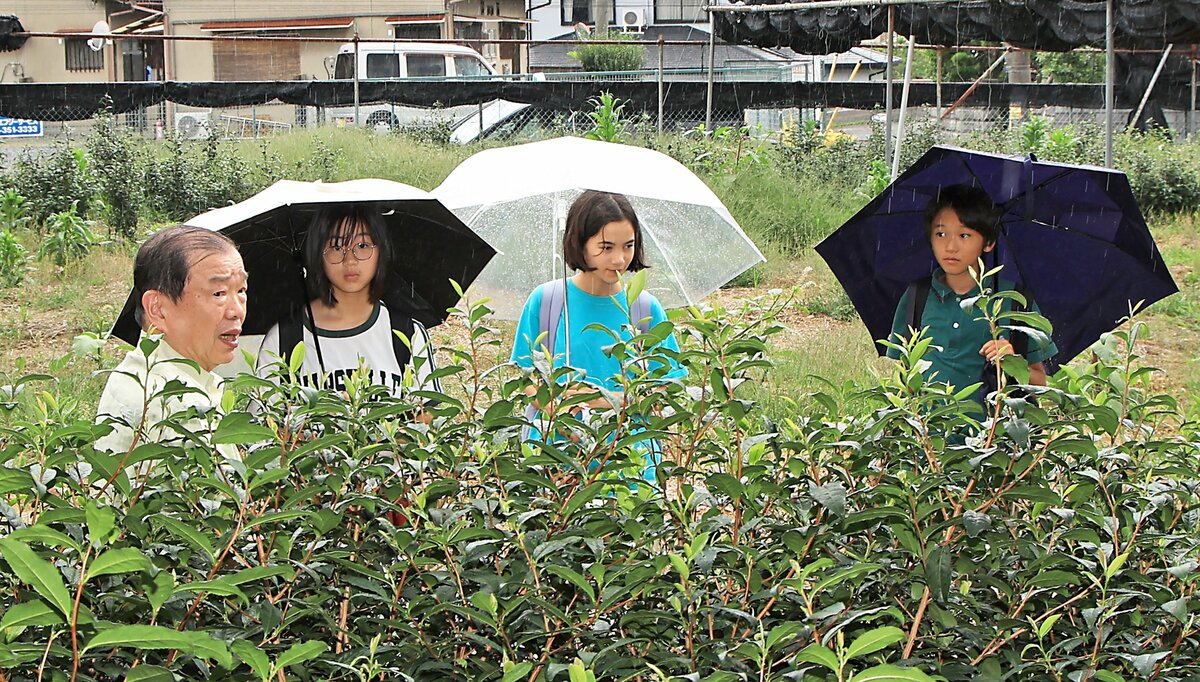
A 300-year-old tea tree at Oku-no-Yama and a kiln built in 1924 show how long Uji's tencha methods have run unchanged — reported by Kyoto Shimbun on 1 August 2026.
Kyoto Shimbun reported that child reporters visited Horii Shichimeien, a tea merchant dating to the Meiji era, and farmer Yamamoto Jintaro on July 4 to trace the roots of Uji tea. At the Oku-no-Yama tea garden the group examined a tea tree said to be 300 years old, one of seven originally planted by shogun Ashikaga Yoshimitsu in the 15th century and still tended by the Horii family. They also watched a Horii-style tencha drying kiln, invented in 1924, running at 180 to 200 degrees for 30-minute batches. The report traced the merchant's workflow from sourcing raw leaf in May and June through grading by aroma, taste and color. Kyoto Shimbun quoted one participant saying, 'Finding delicious tea is what brings me joy,' and another describing the aim as cultivating the Oku-no-Yama trees 'using the same methods as in the past.'
02 Matcha demand shows no signs of cooling; Uji tea market hits record trading value
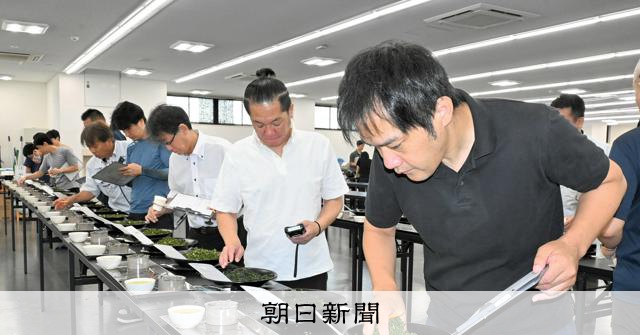
Uji tea trading for the 2026 season closed at about 129.4 billion yen, 1.3 times last year's record, with tencha up 1.5 times — reported by Asahi Shimbun Digital on 31 July 2026.
Asahi Shimbun Digital reported that the 2026 Uji tea season closed on March 31 with combined first- and second-flush trading at approximately 129.4 billion yen, about 1.3 times the prior year's record and the sixth straight year of growth. Mechanically harvested first-flush tencha alone reached roughly 101 billion yen, up 1.5 times year over year, with an average unit price of 17,250 yen. Total volume traded rose to about 950 tons, and the average per-kilogram price across all tea climbed to 13,614 yen from 10,251 yen. The paper said tencha's expansion came at the cost of sencha, gyokuro and kabusecha output as growers shifted acreage toward matcha leaf. One source quoted by Asahi called overseas and inbound demand the driver of price gains across every category, while another welcomed the record but voiced concern that shrinking sencha and hojicha output could dent domestic tea consumption.
03 Hand-rolling Tea Production Training Held by Uji Tea Manufacturing Technique Preservation Association
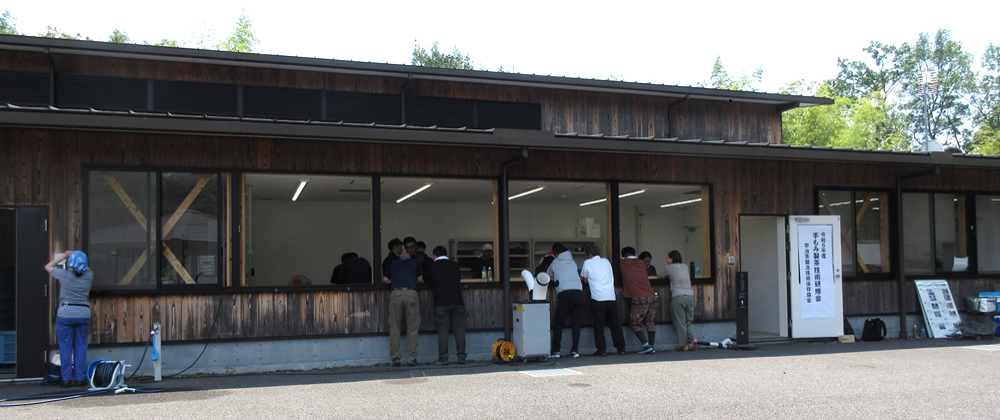
The 56th annual hand-rolling training kept alive a five-to-six-hour technique now used by only a handful of Uji growers — reported by MAFF on 30 July 2026.
Google News reported that the Uji Tea Manufacturing Technique Preservation Association held its 56th consecutive hand-rolling, or temomu, training session at the Kyoto Prefectural Agricultural and Forestry Technology Center. The method takes five to six hours per batch, far longer than machine processing, and is now practiced by only a small number of producers as most farms have mechanized. The association, founded in 1969, traces the craft's lineage to Eisai, who brought tea to Japan, and Myoe Shonin, who began cultivation at Toganoo. Kyoto tea accounts for just 3 percent of Japan's tea-growing area nationally, underscoring how niche the tradition has become. The report noted the technique is a designated Kyoto Prefecture intangible cultural property and depends on high-quality raw leaf. One instructor was quoted describing the goal as rolling leaves 'round, thin, and long' so they unfurl in hot water, adding that skill cannot fix leaves of poor quality.
04 Shizuoka second-flush tea closes at record highs as tencha conversion tightens sencha supply
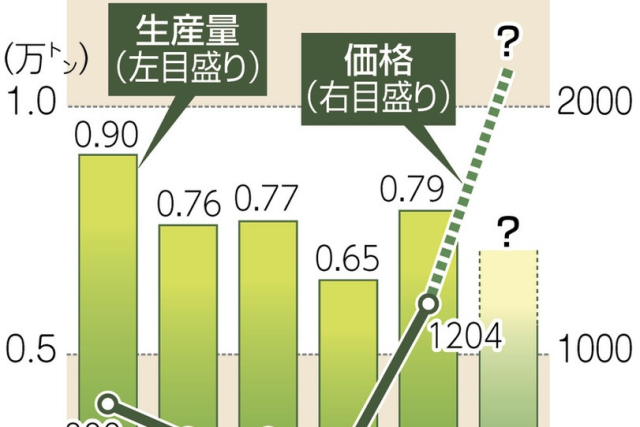
Shizuoka's second-flush tea closed in the low 2,000-yen range per kilogram, up 70 to 80 percent from last year's 1,204 yen — reported by Chunichi Shimbun on 31 July 2026.
Chunichi Shimbun reported that Shizuoka's second-flush tea trading closed at an average in the low 2,000-yen range per kilogram, up 70 to 80 percent from last year's 1,204 yen and 3.3 to 3.5 times 2024 levels, the highest on record. The paper linked the jump to producers converting fields from sencha to tencha to meet export-driven matcha demand, which it said has tightened sencha supply beyond last year's already thin market. The shift is accelerating year over year as more growers move away from sencha, squeezing availability further, the report said. One trader quoted by Chunichi called the price 'an unprecedented high,' a description that lines up with the tencha shortages reported elsewhere in Uji and Kyoto this season.
05 Global matcha boom pushes Japan into tencha shortage
A shortage of tencha, the leaf used to make matcha, has pushed prices to nearly $90 per kilogram, close to double where they stood a year earlier, according to a report carried by Google News. Producers and brands told the outlet they are overwhelmed by rising orders, and even vertically integrated companies that grow their own leaf are now buying from outside their home regions to keep up. The squeeze has reached the ceremonial market: a Sōken-ryū tea master said matcha for tea-ceremony use sold out online last year for the first time. The report attributed the boom partly to what one source described as Western interest in 'Japanese tea culture and philosophy,' and quoted the observation that 'last year was the first time matcha for tea ceremony could not be purchased even on e-commerce sites.'
Taken together, this week's reporting shows Uji and Shizuoka growers riding record prices for matcha even as centuries-old craft and everyday teas like sencha feel the squeeze underneath it.
 From the Ooika shop
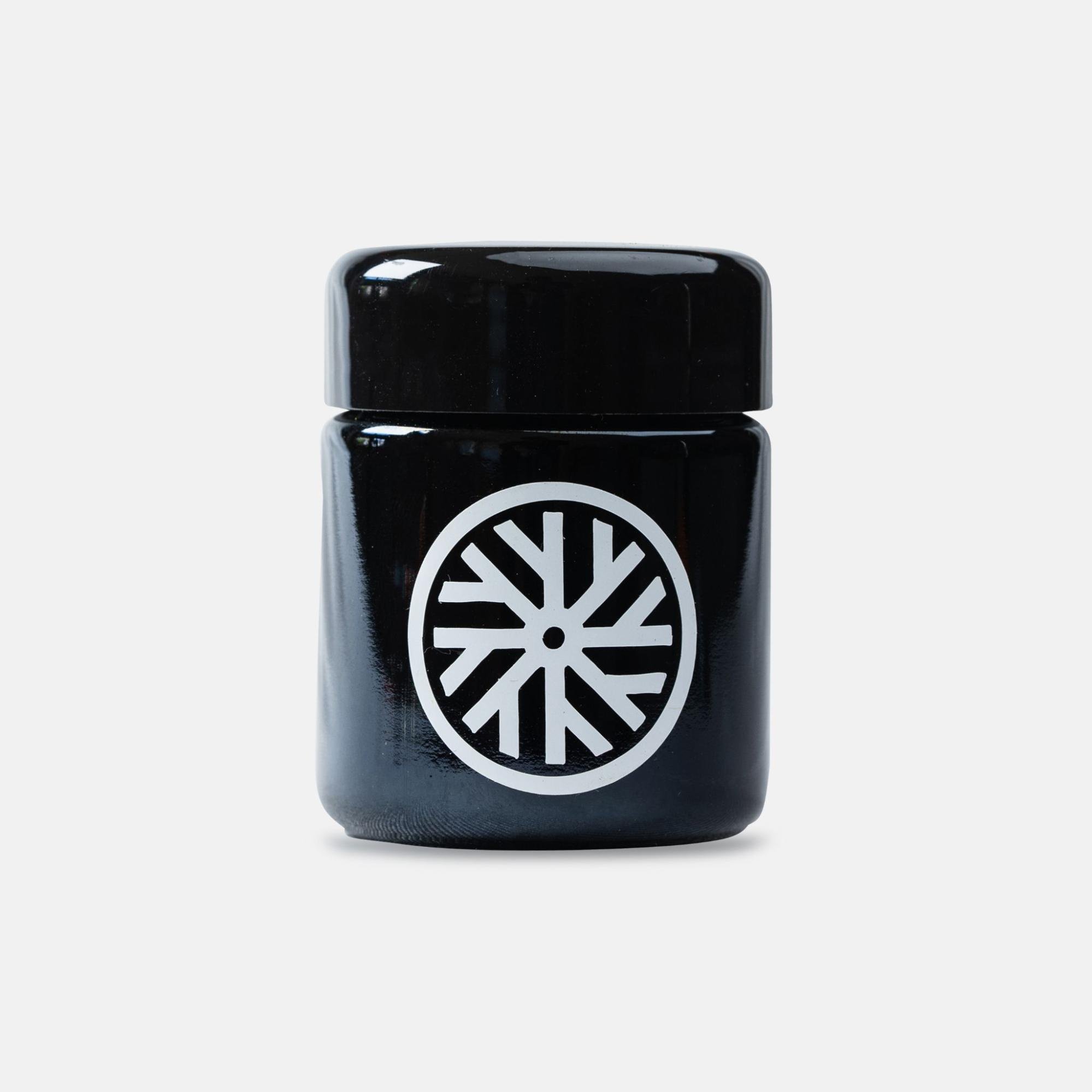
Ooika Matcha Storage Jar
$10.00
Shop now →
From the Ooika shop
Ooika Matcha Storage Jar
$10.00
Shop now →
How this edition was made
Every weekday morning Matcha Wire scans about 40 Japanese sources — national and regional newspapers, government ministries, prefectural tea associations and trade journals — and scores each story for its relevance to the tea industry. This edition covers the five highest-ranked stories of the week just ended, one of them the week's most-read story on Matcha Wire. Figures are quoted as the outlet printed them: nothing is converted between units, nothing is converted between currencies, nothing is rescaled, averaged or estimated, and no number appears on this page that the source credited beside it did not report. Where a date here reads "reported on", it is the date the outlet published, not the date we compiled it. Matcha Wire is the compiler of these figures and never the source of one.
Compiled automatically by Matcha Wire from tracked Japanese sources, with no human editor in the loop. Every figure is credited to the outlet that reported it and checked against that outlet's own article. Corrections: hello@ooika.co.
Using these figures. The figures on this page are facts reported by the outlets credited beside them, and they are free to reuse. If Matcha Wire's compilation saved you the work, a link back is appreciated. The written analysis is ours; please don't republish it wholesale.
Matcha Wire is published by Ooika, in Kyoto, Japan. You can reach a person at hello@ooika.co.
Comments
Create a free account or sign in to join the conversation.
Be the first to comment.