
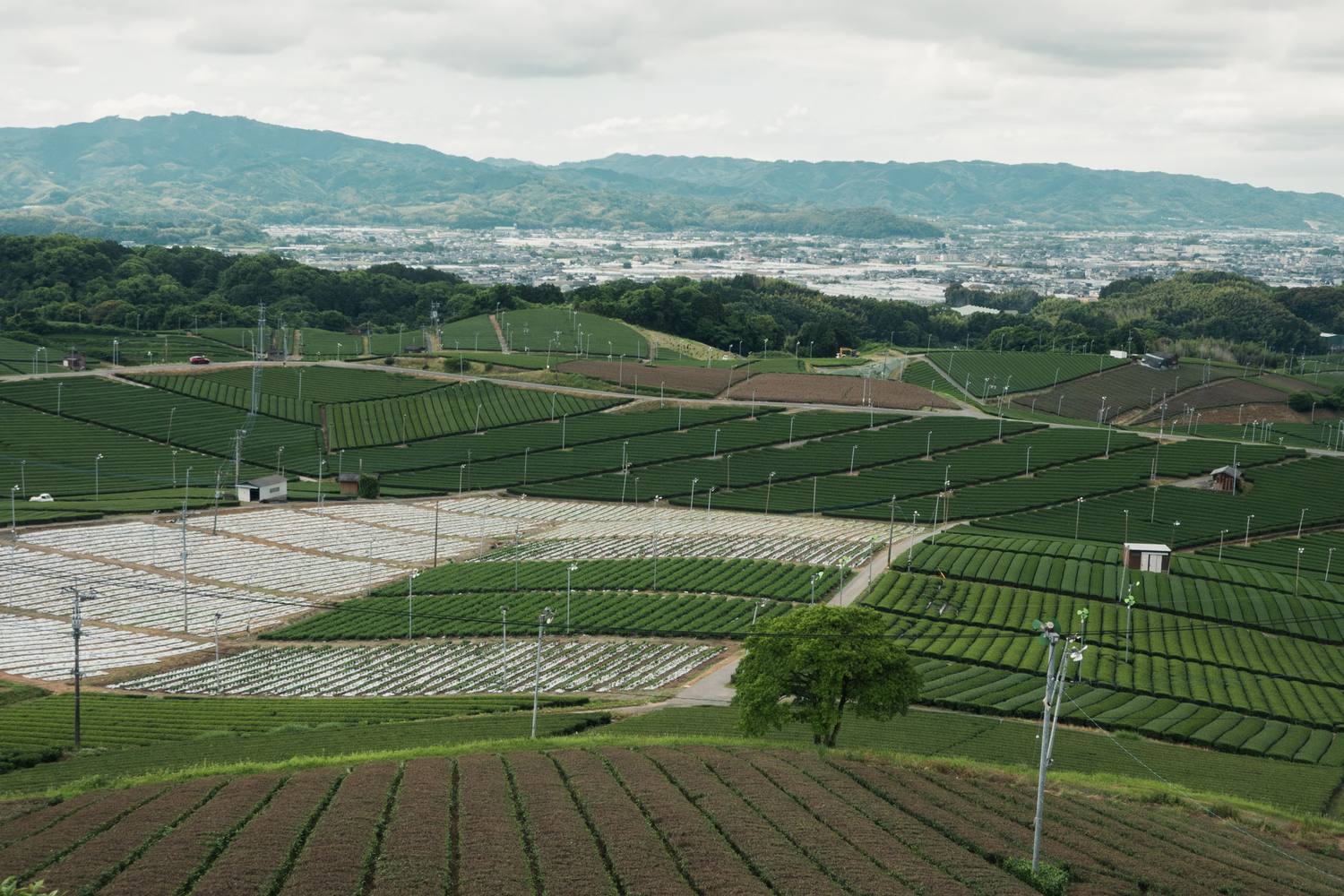
This week's five stories all trace the same line: the global matcha boom has moved from headline to balance sheet. Kagoshima's record export figures, Ito En's profit collapse, Tokyo's new international standards push, Guizhou's rising output, and Asahi's report on sencha and tencha prices all describe one underlying scarcity — more buyers want matcha than Japan's tea fields and mills can supply, and every layer of the trade, from prefectural export offices to global beverage makers to Chinese processors, is now recalibrating around that fact.
This week in five numbers
Every figure exactly as the outlet printed it, credited to the outlet that reported it and compiled by Matcha Wire.- Total farm exports FY2025: 584億円 — reported by 読売新聞オンライン on 25 July 2026. # ↓ the story
- Export value target for agricultural and food products: ¥5 trillion — reported by projectdesign.jp on 24 July 2026. # ↓ the story
- Tea-leaf price increase vs. decade ago: 10× increase — reported by Nikkei on 26 July 2026. # ↓ the story
- Tongren matcha cultivation base: 5,667 hectares — reported by People's Daily Online on 23 July 2026. # ↓ the story
- Tencha average price (2024): ¥3,278/kg — reported by Asahi Shimbun Digital on 5 July 2026. # ↓ the story
MAFF's new strategy adds a second thread worth watching alongside the price story: who gets to define what 'matcha' even means, once demand has outgrown supply.
01 Kagoshima agricultural exports hit record ¥58.4 billion; matcha boom drives unit prices higher

Kagoshima's tea exports rose 64% to ¥10.3 billion, lifting total farm exports to a record ¥58.4 billion (FY2025) — reported by 読売新聞オンライン on 25 July 2026.
The Yomiuri Shimbun reports Kagoshima Prefecture's agricultural, forestry and fisheries exports reached ¥58.4 billion in fiscal 2025, up ¥11.3 billion from the previous year and the fifth consecutive annual record. Tea shipments alone climbed 64% to ¥10.3 billion, with agricultural exports overall rising 56% to ¥11.5 billion. Matcha unit prices surged, the paper notes, as demand rose alongside health-conscious trends and the Japanese food boom. Local officials said public-private export promotion efforts are bearing steady fruit and that the prefecture will keep working toward its ¥80 billion export target for fiscal 2030 — a sign that in Kagoshima, at least, the matcha boom is translating almost directly into farm income rather than just attention.
02 MAFF Adopts International Standards Strategy to Protect Matcha's Name and Japan's Tea Leadership
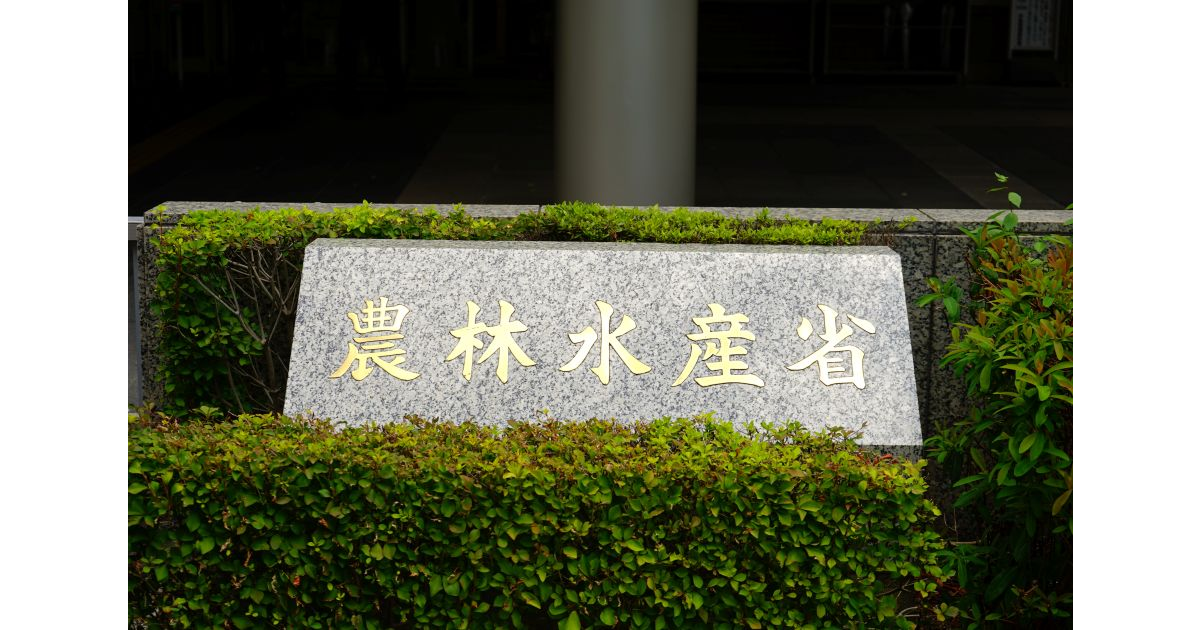
Export value target for agricultural and food products: ¥5 trillion — reported by projectdesign.jp on 24 July 2026.
Google News reports Japan's Ministry of Agriculture, Forestry and Fisheries adopted its first comprehensive international standards strategy on July 24, 2026, naming matcha as the clearest example of what is at stake. The ministry warned that without continued active involvement in the discussion, not only may matcha's true value fail to be properly conveyed, but Japan could also lose the freedom to use the name in international markets, adding that international markets have shifted from being mere competitive spaces for products to arenas where dominance over rule-making is contested. The strategy builds on the ISO/TR21380 technical report Japan issued in April 2022, folds in an existing IP strategy and a METI standards framework, and backs a push toward ¥5 trillion in high-value agricultural exports by 2030.
03 Matcha Boom Hurts Ito En: Leaf Costs Soar Tenfold, but Price Hikes Lag
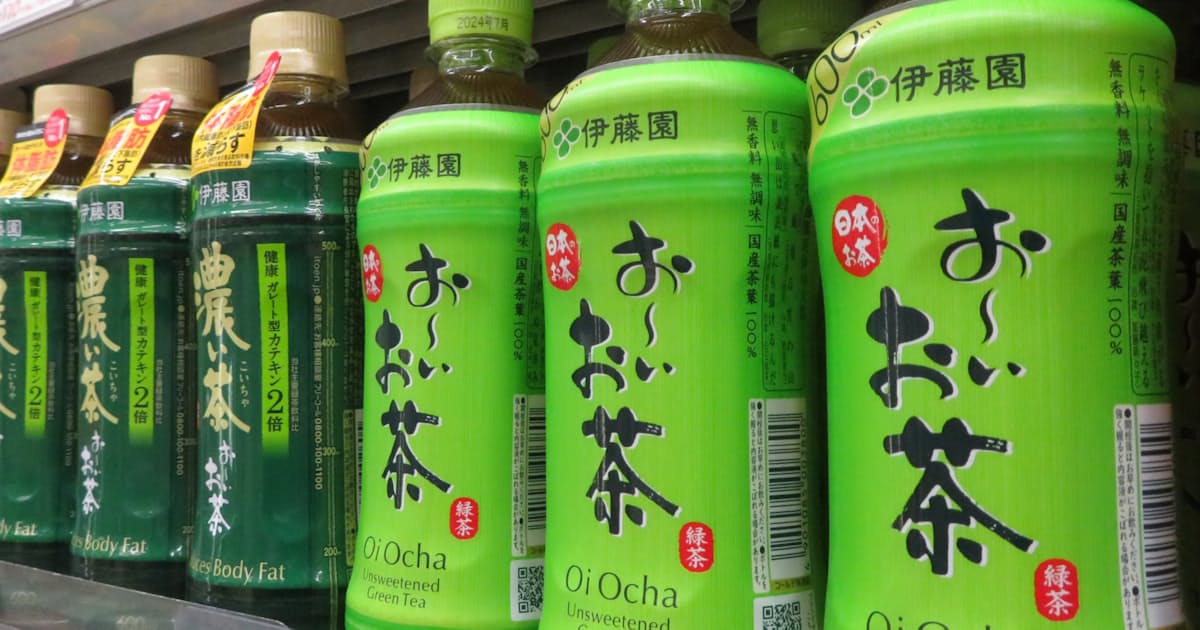
Ito En's net profit fell more than 70% as matcha leaf costs hit ten times their level from a decade ago — reported by Nikkei on 26 July 2026.
Google News reports Ito En, Japan's largest green-tea beverage maker with over 30% of the domestic market, posted a net profit drop of more than 70% for the fiscal year ending April 2026. The company points to matcha leaf cost inflation and impairment losses, saying tea-leaf prices had reached 10 times their level from a decade ago. Supply shortages first surfaced last summer, when something felt wrong and shortages began disrupting procurement, even as global demand for matcha kept climbing. Ito En has not passed the full cost increase on to consumers, leaving the market leader absorbing pressure that smaller producers riding the same boom are reportedly passing straight through instead.
04 The Aroma of Matcha from Tongren, Guizhou Province Envelops the World

Guizhou's Tongren region produced 2,500 tons of matcha in 2025, becoming China's top exporter and world's No.2 — reported by People's Daily Online on 23 July 2026.
Google News reports Tongren, in China's Guizhou province, had built 5,667 hectares of dedicated matcha cultivation as of December 2025 and now operates what it calls the world's largest matcha-dedicated processing facility. Output reached 2,500 tons in 2025, giving the region China's top export share and the world's second-largest matcha export position by volume. The report states that in 2025, Tongren matcha production and sales reached 2,500 tons, with export volume ranking first domestically in China and second globally. The matcha is used across beverages, baked goods and snacks, aimed at mass-market reach rather than the ceremonial-grade niche Japan has traditionally held, framing Tongren's scale as direct competitive pressure on Japan's premium position.
05 (Reporter Salon Editor's Pick) Sencha Prices Also Soaring — No More Cozy Cups of Tea
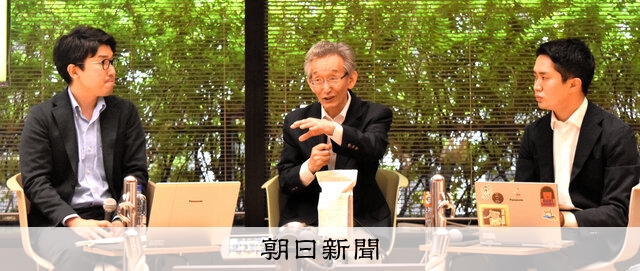
Tencha prices jumped from ¥3,278/kg in 2024 to ¥8,562/kg in 2025, a 2.6x rise, as sencha and hojicha prices also more than doubled — reported by Asahi Shimbun Digital on 5 July 2026.
Asahi Shimbun Digital reports tencha prices jumped from ¥3,278 per kilogram in 2024 to ¥8,562 per kilogram in 2025, a 2.6-fold rise, and that hojicha, sencha and gyokuro unit prices have also more than doubled. Stone mills at Kuwabara are turning out roughly 40 kilograms of matcha a day across 60 mills, nowhere near enough to meet demand. One grower told the paper that if we fight on price or volume, Japanese matcha loses, and that Japan should raise quality even further and compete on matcha quality. Another voice in the piece said they are afraid Japan may lose the culture of brewing good tea in a kyusu and drinking it cozily, as everyday tea prices climb out of reach.
Read together, the week's reporting suggests Japan's matcha industry is being pulled in two directions at once — toward record export income and toward a supply squeeze it cannot yet keep pace with, while China builds volume and Tokyo tries to lock down the name itself.
 From the Ooika shop
Shibutaさん Bizen Silver Decorated Kyūsu (急須) Teapot (備前銀彩急須)
$269.00
Shop now →
From the Ooika shop
Shibutaさん Bizen Silver Decorated Kyūsu (急須) Teapot (備前銀彩急須)
$269.00
Shop now →
How this edition was made
Every weekday morning Matcha Wire scans about 40 Japanese sources — national and regional newspapers, government ministries, prefectural tea associations and trade journals — and scores each story for its relevance to the tea industry. This edition covers the five highest-ranked stories of the week just ended, one of them the week's most-read story on Matcha Wire. Figures are quoted as the outlet printed them: nothing is converted between units, nothing is converted between currencies, nothing is rescaled, averaged or estimated, and no number appears on this page that the source credited beside it did not report. Where a date here reads "reported on", it is the date the outlet published, not the date we compiled it. Matcha Wire is the compiler of these figures and never the source of one.
Compiled automatically by Matcha Wire from tracked Japanese sources, with no human editor in the loop. Every figure is credited to the outlet that reported it and checked against that outlet's own article. Corrections: hello@ooika.co.
Using these figures. The figures on this page are facts reported by the outlets credited beside them, and they are free to reuse. If Matcha Wire's compilation saved you the work, a link back is appreciated. The written analysis is ours; please don't republish it wholesale.
Matcha Wire is published by Ooika, in Kyoto, Japan. You can reach a person at hello@ooika.co.
Comments
Create a free account or sign in to join the conversation.
Be the first to comment.